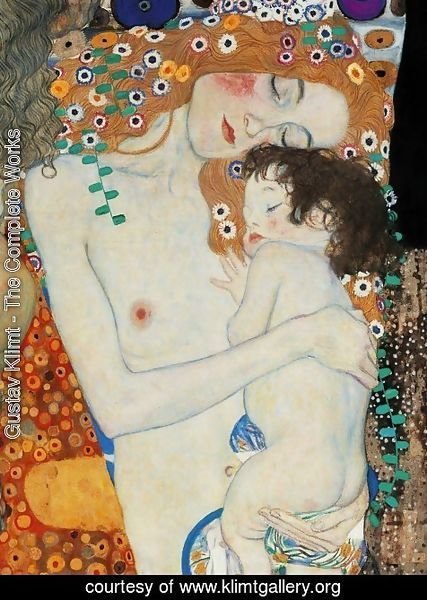
Something I have not discussed in this blog yet is the gendered dimension of ageing. It has been widely discussed that that female body is subject to modification, alteration and validation by medicine. The image of an ‘ideal’ female body continues to persist in mainstream media, despite the efforts from activists and industries to challenge the pervasive normativity.
For cis-gendered women, reproductive decline begins around her mid-30s. Having not been through this myself, I am assuming from stories of women around me that this decline provokes a reimagined relationship with the body. I am in no way defining a woman by her reproductive potential, nor am I assuming that all women have the desire to have a child. Yet, fertility is understandably, an intrinsic part of a woman’s life narrative. Pregnancy causes a great strain on the body and requires investment from the mother and father to-be and surrounding family members. Thus, it stands to reason that the narrative of a woman’s life in some capacity revolves around her reproductive potential.
Menopause is a phase of the ageing process that may alter how a woman perceives her body. She is no longer able to conceive or give birth to a child. (Whether this is seen as a positive or negative change is highly subjective.) The objective fact is that a woman’s reproductive capacity peaks and troughs, and I venture that these changes in fertility levels help a woman carve out her own narrative of ageing.
Up to this point, it has been made clear that menopause is a finite end to a woman’s fertility; a defining moment at which she must reckon with her body. To challenge this theory, I would like to explore the process of egg-freezing. The video below investigates the idea of the ‘biological clock’ within the context of the reporter exploring egg freezing for herself. The clock metaphor is part of ageing narrative of women’s bodies, instilling a fear of infertility after a certain age. The lack of an similarly trite metaphor for men’s reproductive potential is worth exploring, but I do not have space to do that here.
Egg freezing is part of a wider discussion about the way in which scientific advancements can alter the body’s natural constraints.
“Philosophers… have long played out the disputes between those who believe that humans are at their most noble when they recognise their natural limits… and those who say that the most human form of life is to conquer, subdue, manipulate and escape such natural limits.” (Rose, 2007:96)
Women should be able to make choices regarding their own fertility. However, my argument here is not a moralistic one, it concerns the changing temporal expectations of the body.
Egg freezing changes the temporal restrictions imposed on a woman’s body by menopause. It encourages women to have reproductive autonomy, and the process provides a sense of security and empowerment for women, prolonging her ability to conceive (Shkedi-Rafid & Hashiloni, 2011). Egg freezing defies the biological narrative of the body. For cancer patients who have frozen their eggs, studied by Inhorn et al (2017), freezing offers a ‘temporal bridge’ across the uncertainty that cancer brings. Faced with the potential loss of fertility and their own mortality, women must acknowledge a temporal double-bind. If they survive, they may not be able to conceive a child. Egg freezing offers hope in a period of uncertainty, and woman said that they felt hopeful thinking of their future children as ‘waiting’ for them. At a distressing time, their eggs were placed into a liminal space, no longer subject to the fatal effects of chemotherapy nor the natural effect of menopause. Evidently, egg freezing challenges the normal ageing trajectory of a woman’s body, providing a greater sense of reproductive security for those who want it.
There are those who would argue that our notion of temporality is constructed and subjective. Life is not linear, it is cyclical and the body is only the materialisation of a soul for a space and time. Or, perhaps the body does in fact set out a linear trajectory of ageing, from which our potential is carved out. I wonder if there is a way of bridging these two opposed ideas, thinking about the body as an object defined by biological temporal restrictions, whilst also acknowledging that changes in human knowledge and science technologies can alter the restrictions previously imposed.
Bibliography
Inhorn, M. et al. 2017. Medical egg freezing and cancer patients’ hopes. Fertility preservation at the intersection of life and death. Social Science & Medicine 195, 25-33
Lamb, Sarah. 2000. White Saris and Sweet Mangoes: Ageing, gender and the body. University of California Press.
Lamb, Sarah. 2017. Successful Ageing as a Contemporary Obsession: Global Perspectives. Rutgers University Press.
Rose, Nikolas. 2007. The Politics of Life Itself: Biomedicine, Power and Subjectivity in the Twenty-First Century. Princeton University Press.
Shkedi-Rafid, S & Hashiloni-Dolev, Y. 2011. Egg freezing for age-related fertility decline: preventative medicine or a further medicalisation of reproduction? Analysing the new Israeli policy. Fertility and Sterility 96(2), 291-294
 Anthropology of Ageing